Executive briefs, technical deep-dives, case studies, and field notes for leaders and architects building AI-ready data infrastructure.
What leadership teams need to know about building the data foundation required to move AI from promising prototypes to reliable production systems.
The first three resources answer the core question behind production AI: how to give models and agents fresh, governed operational context without touching source-system performance.
What leadership teams need to know about building the data foundation required to move AI from promising prototypes to reliable production systems.
How enterprises can connect databases, applications, and events into governed real-time context for production AI agents.
A technical brief on why stale batch pipelines, missing lineage, and unmanaged data movement block production AI, and how to design a real-time, governed data foundation.
Filter by role and depth. AI-focused resources are placed first, followed by deployment, architecture, operations, and customer proof.
How enterprises can connect databases, applications, and events into governed real-time context for production AI agents.
A technical brief on why stale batch pipelines, missing lineage, and unmanaged data movement block production AI, and how to design a real-time, governed data foundation.
A leadership brief on data residency, compliance risk, and controlled deployment models for real-time data infrastructure across APAC.
An executive brief on how batch data delays create measurable business cost, how to quantify the latency gap, and how to build a practical migration path to real-time data infrastructure.
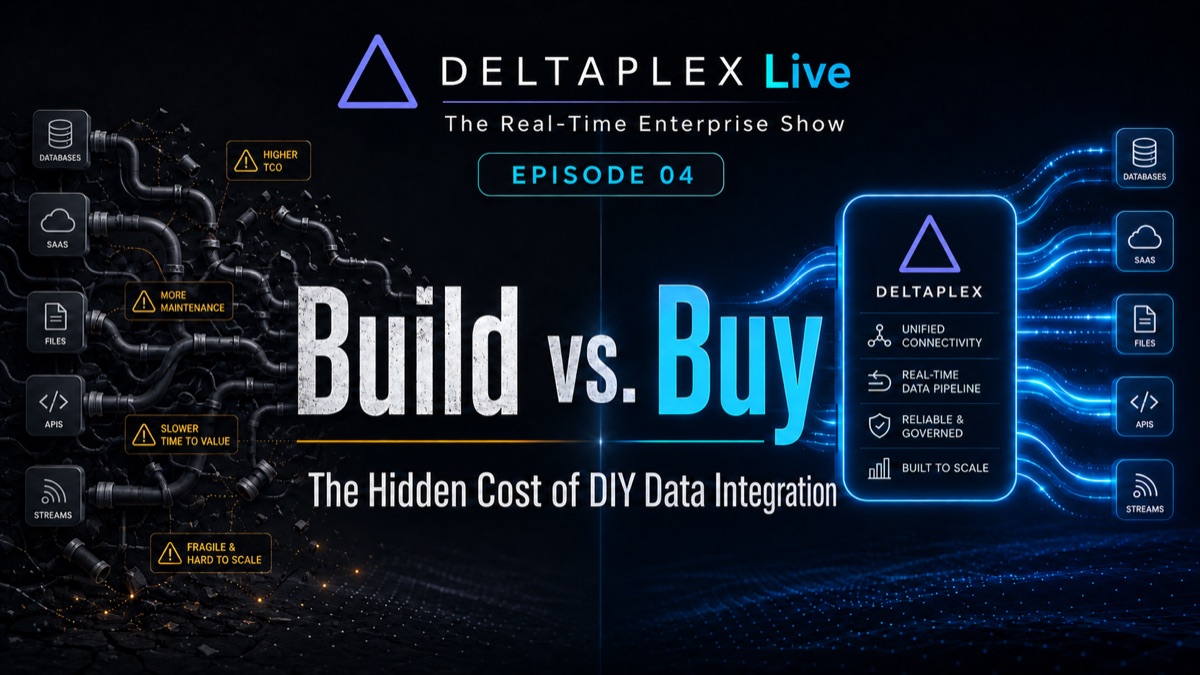
A leadership brief on the true cost of building data integration infrastructure in-house, including engineering effort, operational risk, governance burden, and opportunity cost.
A technical brief on how log-based Change Data Capture captures committed database changes with minimal source impact, reliable delivery, schema handling, and production-grade operations.
A technical brief on how to detect, classify, and safely handle database schema changes in production data pipelines without breaking downstream systems.
How a regional bank moved from overnight batch ETL to governed, low-latency data pipelines for fraud detection, risk visibility, and operational decision-making.
A practical guide to the hidden operational costs of fragile data replication, from schema drift and over-provisioning to weak monitoring and untested disaster recovery.
How an anonymized USD 100B+ regional bank in Southeast Asia reduced risk data latency from hours to seconds with on-premises, log-based CDC.